
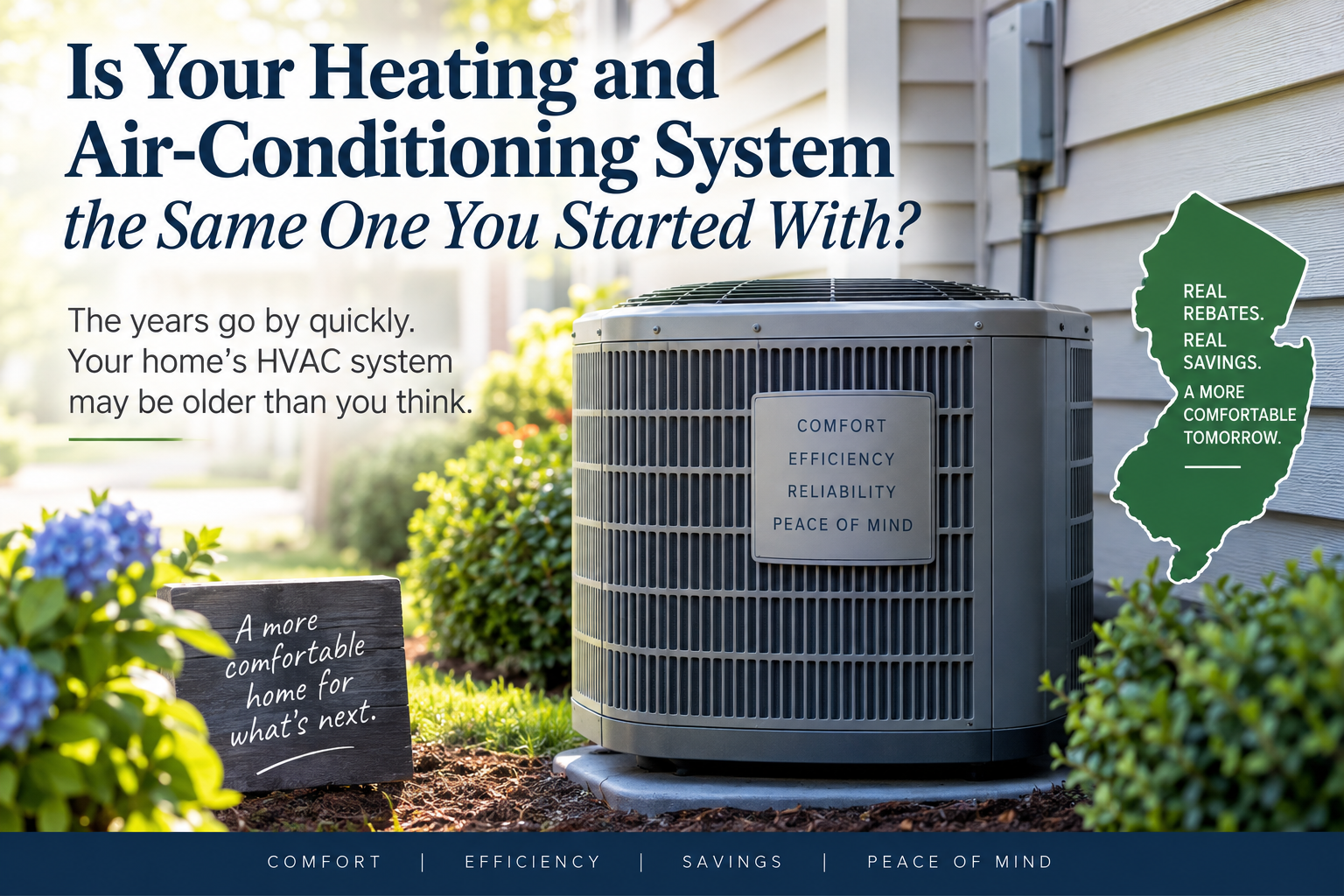
If you've lived in your home for a number of years, it's easy to lose track of just how much time has passed for some of the systems you rely on every day. Your heating and air-conditioning system is a perfect example.
Maybe the system was only a few years old when you bought the house. Ten or fifteen years later, it may still be doing its job perfectly well—but it's now at a very different stage of its life.
That doesn't mean you should replace it simply because it's getting older.
Age is information, not necessarily a reason to replace something.
But as a system gets older, I do think it's worth knowing what you have, how well it's operating, and what your options would be if replacement eventually becomes necessary.
And for New Jersey homeowners, there's another good reason to think about this before your system stops working.
New Jersey utility companies offer energy-efficiency programs that may provide rebates and financing for qualifying heating, cooling and other energy-saving improvements. The programs, incentives and eligibility requirements vary by utility and can change over time.
I have used versions of these programs myself, as have family members and clients I've known over the years.
The potential savings are worth investigating.
For example, PSE&G currently offers its residential customers an HVAC Instant Rebates Program with up to $1,050 in rebates on eligible equipment. Qualified residential customers may also be eligible for up to $25,000 in interest-free repayment for up to seven years for qualifying projects. That is worth looking into if you are replacing equipment.
One important word of caution: I'm NOT talking about one of those online advertisements or solicitations telling you that you may qualify for a special rebate because you happen to live in a certain ZIP code.
I'm talking about established programs offered through your utility company.
Start with your utility company's official energy-efficiency program, review the requirements and, when required, choose from its participating contractors. With PSE&G's HVAC program, for example, a participating contractor confirms eligibility, explains available incentives and financing, and applies qualifying rebates directly to the project invoice.
In other words, don't confuse a legitimate utility program with an advertisement or solicitation that happens to use words like “rebate,” “energy savings” or “government program.” Always make sure you're dealing with your utility's official program before providing personal information or signing anything.
There's also an important difference between investigating your options while your current system is still running and trying to make those decisions when it's 95 degrees outside and the air conditioner has just stopped working.
When something fails unexpectedly, our first reaction is, of course, “Get it fixed.”
That's not always the ideal time to compare equipment, investigate rebate programs or thoughtfully decide what system makes the most sense for your home.
So if your heating or air-conditioning equipment is getting older, I'm not suggesting it needs replacing.
I'm suggesting something much simpler:
Know how old it is. Have it maintained. Know its condition. And learn what programs may be available before you actually need them.
Your utility company's official energy-efficiency program is a good place to start, and a qualified participating HVAC contractor can help determine what equipment and incentives may apply to your particular home. Because programs, eligibility requirements, rebate amounts and financing terms change, always verify the current details before making a decision.
A little planning doesn't mean something is about to go wrong.
It simply means that if the day eventually comes when your system needs replacing, you'll be making a planned decision rather than an emergency one.
And whenever possible, that's a much better way to take care of a home.
With You Every Step of the Way.
Check out this article next